Repairs & Rebuilds
The Importance of Waterstops in a Tiled Shower
Understand how a shower waterstop works with waterproofing, floor falls, drainage and shower-screen positioning—and what can go wrong when the system is interrupted.
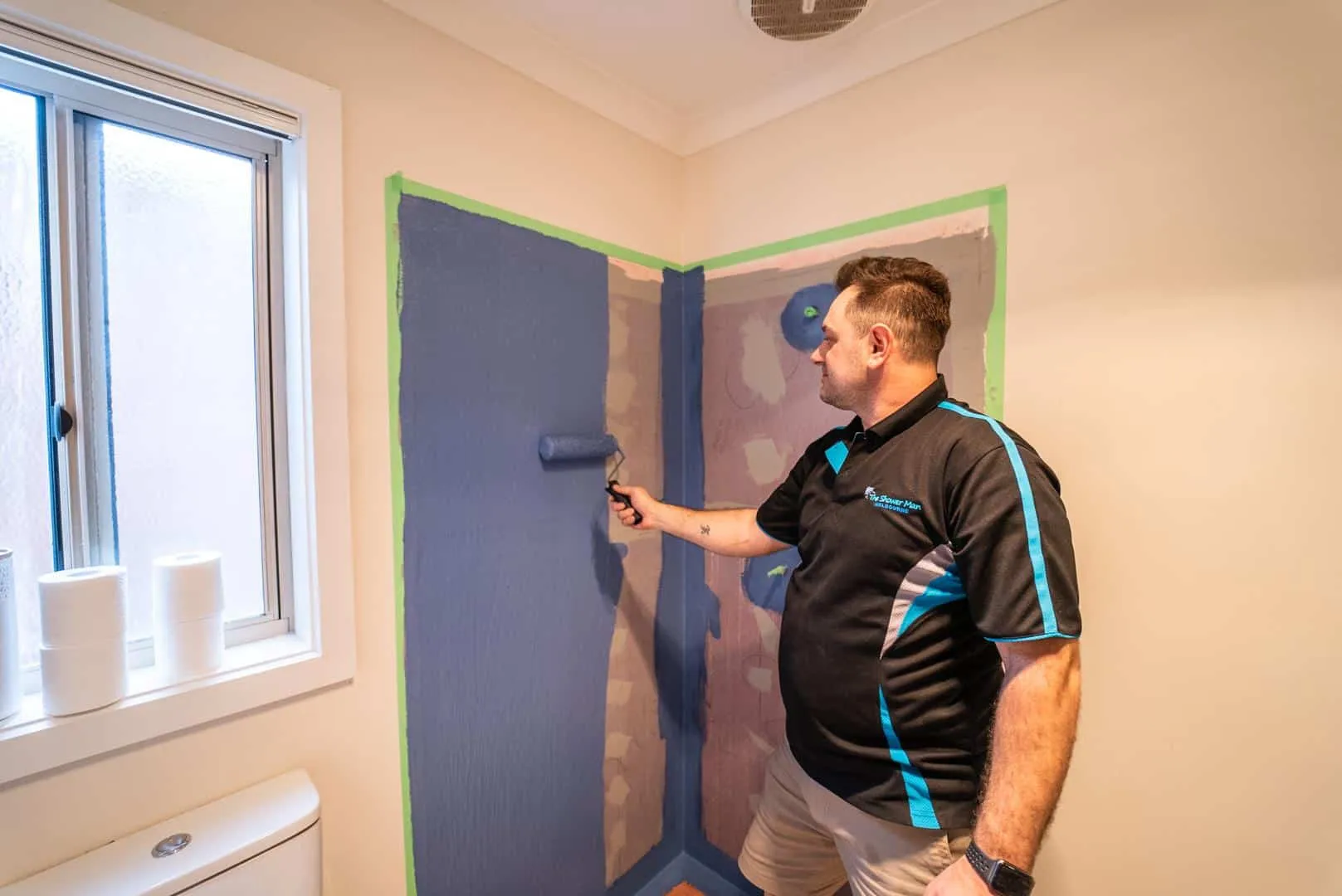
What a shower waterstop actually does
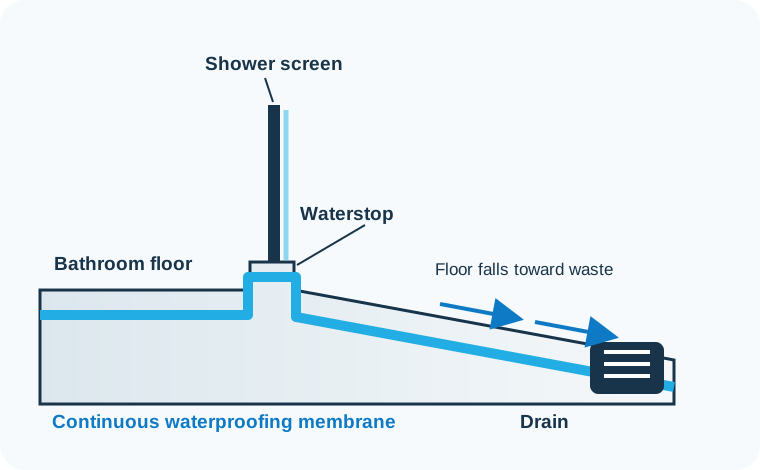
A waterstop is the formed edge at the shower entry or perimeter that defines where the wet shower base ends. It is commonly an angle or hob built into the tiled assembly—not a bead of silicone added after the tiles are finished.
Its job is to give the waterproofing membrane a continuous, raised termination and help contain water within the area designed to drain to the shower waste. It is one part of a connected system; it cannot compensate for failed waterproofing, incorrect falls or a poor drainage connection.
Location and waterproofing continuity
The waterstop belongs at the boundary of the shower base. The waterproofing must connect to it continuously so there is no low gap where water can move beneath the adjoining bathroom tiles.
Corners, door openings and changes in direction matter because the termination needs to remain connected around the whole relevant boundary. A waterstop that is present on one side but interrupted at a corner does not create a continuous containment line.
- The waterstop defines the shower’s wet-area boundary.
- The membrane should turn up and terminate continuously against that boundary.
- Junctions and corners should not leave an unprotected path into adjoining floor layers.
How floor falls and drainage work with the waterstop
The finished shower floor should direct surface water toward the waste. The layers below the tile also need to be detailed so incidental moisture is managed toward the drainage connection rather than trapped at the perimeter.
If the floor falls away from the waste, has a low point beside the screen or meets a poorly detailed drain, water can pond even when a waterstop is present. Persistent moisture then increases the chance of staining, mould, loose finishes and water tracking into vulnerable junctions.
Why shower-screen position matters
The screen should be positioned so water running down the glass and frame returns to the shower side of the waterstop. If the frame bridges the wrong side of the boundary or creates a ledge over it, water can collect at the base, become trapped in the frame or escape toward the bathroom floor.
Screen position, drainage openings and sealant placement must be considered together. Sealing every visible opening is not automatically safer: blocking intended drainage paths can hold water inside the frame.
Common waterstop and perimeter failures
A leak beside the shower does not prove the waterstop is the only cause. These details are useful clues, but the whole shower system should be assessed before a repair scope is chosen.
- The waterstop is missing, too low or discontinuous at an opening or corner.
- The waterproofing does not remain bonded and continuous at the termination.
- The shower screen is positioned so water sits on or escapes across the boundary.
- Poor floor falls leave a persistent puddle beside the screen or waterstop.
- The drainage connection does not manage moisture within the tiled assembly.
- A surface seal hides the symptom without addressing a failure below the tiles.
Choose the next step from evidence
A specialist assessment can compare moisture patterns, movement, floor falls, drainage, screen position and visible construction details. Some issues may be limited to a screen or finish; others show that the tiled and waterproofed assembly needs to be opened.
The goal is a visual assessment and rectification quote—not leak-source identification, diagnostic testing, a compliance certificate or an inspection report.